





What Is ERP Software?
ERP is software that brings the work a company keeps in separate programs — accounting, sales, purchasing, stock, production, payroll — into a single database. The difference: when a sales invoice is issued, stock goes down, the customer balance is debited and the accounting entry is created. You enter it once instead of three times, and at month end you get a report instead of hunting for differences.
What is ERP software?
ERP (Enterprise Resource Planning) software runs a company's finance, sales, purchasing, stock, production, human resources and customer relationship processes in one system, on one database. Accounting software only keeps the financial record; ERP also manages the work that produces that record. Every step of an order, from quote to collection, is tracked in the same system, and data transfer between departments disappears.
How does ERP work in a company?
One database
Customers, products, suppliers and the chart of accounts are defined once. Sales, accounting and production all see the same record; there are no two different customer names in two departments.
Documents drive the process
A sales order reserves stock, the delivery note reduces it, and the invoice creates the customer debit and the journal entry. The user enters one document; the system links the rest.
Processes are connected
Production passes its material needs to purchasing, purchases go into stock, payroll feeds into cost. Each department does its own job while the data builds up in one place.
Reports from the same data
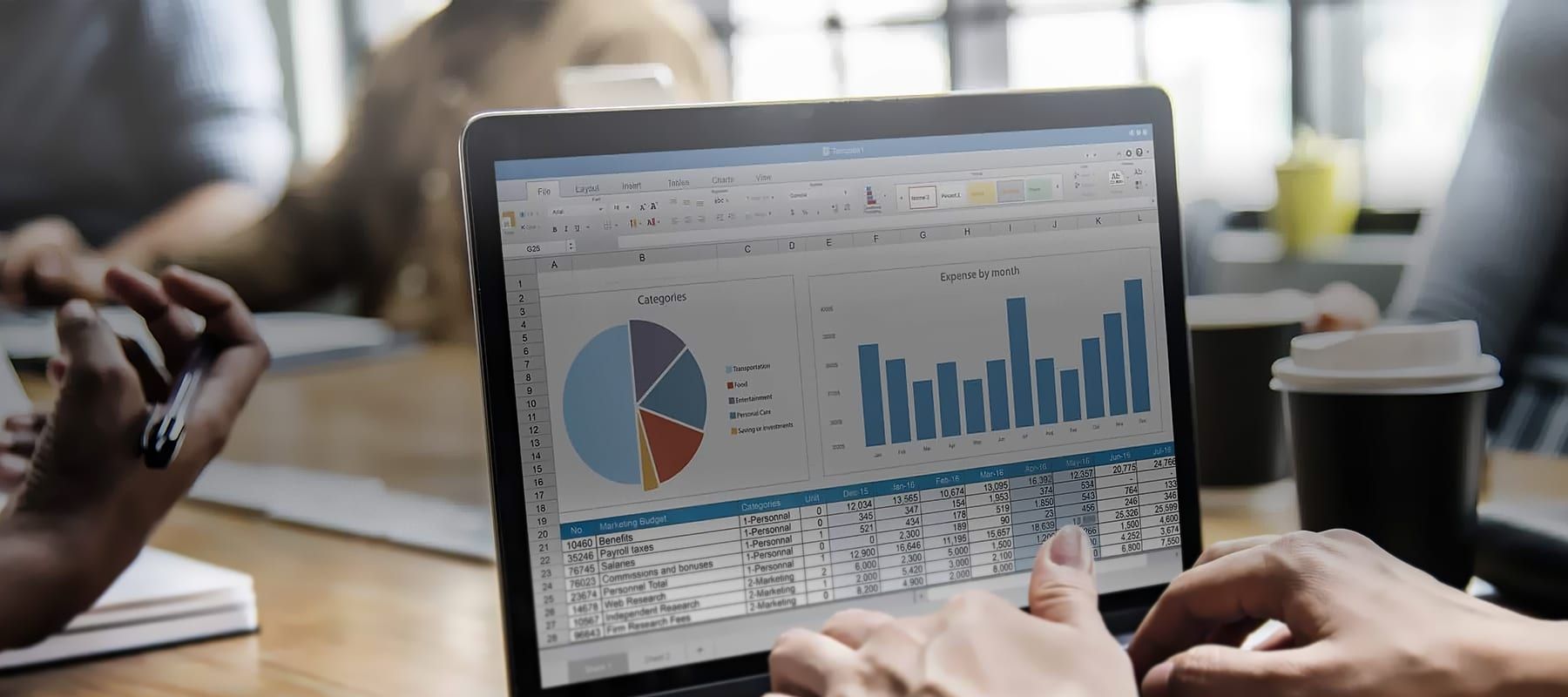
Balance sheet, profitability, stock value, sales performance — all come from the same records. There are no Excel files to merge.
Which modules does SmartERP include?
Accounting
Turkish uniform chart of accounts (VUK), general journal, balance sheet, income statement, fixed asset depreciation, VAT return, period-end closing. US GAAP and German HGB SKR03/04 are also ready.
Sales, purchasing, stock
Orders, invoices, delivery notes, returns, price lists; purchase requests and supplier comparison; FIFO/LIFO/moving average stock valuation, multiple warehouses, stock counts.
Finance and accounts
Customer and supplier accounts, payments, cash, bank accounts, bank reconciliation, credit notes, contract transactions.
Production
Work orders and operations, MRP explosion, capacity planning, quality control points, scrap report.
Payroll and performance
Turkish payroll (tax/social security/unemployment), overtime, severance, leave accrual; OKR, 360° feedback, bonus calculation.
e-Documents and AI
Generation of UBL-TR e-Invoice, e-Archive, e-Waybill, e-SMM and e-MM for Turkey; an AI panel you can ask questions on every screen and 128 built-in AI agents — with your own LLM key.
Who is it for?
Companies using several programs side by side
Businesses with accounting in one place, stock in another and quotes in Excel. The first thing ERP gives them is an end to re-entering data.
Manufacturing SMEs
Manufacturers whose bills of materials, work orders, material requirements and costs need to be linked to each other.
Growing trading companies
Companies that start with basic bookkeeping and will expand into payroll, production and HR — they grow within the same system without switching programs.
Frequently asked questions
What is ERP, in short?
Software that brings all of a company's processes — accounting, sales, purchasing, stock, production, payroll — together in one database. A record entered by one department falls into place automatically in the others.
What is the difference between ERP software and accounting software?
Accounting software keeps the financial record; ERP also manages the work that produces that record. In accounting software you enter the invoice by hand; in ERP the order, delivery note and invoice are already linked, and the journal entry is created automatically. In SmartERP the accounting module is part of the ERP, not a separate program.
What does ERP software do?
Three things: it ends entering the same data in several places, it removes inconsistencies between departments and it makes reports come from a single source. In daily life that means getting a report at month end instead of hunting for differences.
Isn't ERP too much for an SME?
It used to be; implementation took months and needed an army of consultants. In SmartERP all 13 module groups come enabled in every plan and no installation is needed in the cloud; a two-person company can use it and keep going in the same system as it grows.
What do ERP software prices depend on?
In SmartERP, on the number of users and the deployment type (shared cloud or a database dedicated to your company). Choosing modules does not change the price, because modules are not sold separately; all of them are enabled. Data migration and training are discussed separately.
Cloud ERP or my own server?
SmartERP currently runs in the cloud in two ways: a shared database or a database dedicated to your company. In both, installation, backups and updates are handled by us and the data is hosted in Turkey; you can move from shared to dedicated without migrating data. Installation on your own server is on the roadmap.
How do you learn ERP software, and how long does the switch take?
The long part of a switch is not learning the software but moving existing data (customers, products, opening balances) and fitting your workflow into the system. Tell us which program you are coming from and how many users you have, and we will give you a realistic timeline.
Does it work with my current e-invoice provider?
The SmartERP e-Document module submits to GİB (the Turkish Revenue Administration) directly or through a private integrator. ELPO itself is a GİB-approved private integrator, so no separate company is needed; if you prefer to stay with another integrator, that is also possible.
What does AI do in the ERP?
A panel on every screen: it answers questions such as "where is this month's budget variance coming from?" or "are there duplicate customer records?" by looking at your data, and it designs forms and reports. There are 128 built-in AI agents; you use your own LLM key (OpenAI, Anthropic, Gemini) and pay the provider yourself.
Is it locally developed ERP?
Yes. SmartERP is developed in Turkey by ELPO Bilişim, Turkish regulations (VUK, payroll, GİB e-documents) are built in and the data is hosted in Turkey. US and German accounting standards are also ready.
Will I be told if invoices are left unposted at month end?
Yes. On the 1st of every month the previous month is scanned; if there are invoices not posted to accounting or journal entries awaiting approval, company administrators receive a single notification such as "September 2026 is not ready for closing — 6 invoices not posted to accounting, 2 journal entries awaiting approval". Reversed documents do not count as pending work; if the month is clean, no notification is sent. The "Go" link in the notification opens the invoice list showing only unposted invoices.
How much does ERP software cost?
The price depends on the number of users and the deployment type. There is no split into module packages — all 13 module groups come enabled in every plan.
From: $25 / month Excl. VAT Incl. VAT $30 / month
| Package | Price (Excl. VAT) |
|---|---|
| SmartERP Shared Database Per user · extra users 50% off | $25 / month $250 / year Incl. VAT $30 / month |
| SmartERP Dedicated Database Per user · extra users 50% off | $30 / month $300 / year Incl. VAT $36 / month |
All packages and current prices are on the purchase page. Prices may change; the amount shown at checkout applies.
Related solutions
Let's see together whether ERP is too much or just right for you
Tell us which programs you use side by side today and how many people will use the system; we will send your needs and how the switch would go in writing within 24 hours.
Request a Quote