







What Is ATG? Automatic Tank Gauging and Leak Detection
ATG (automatic tank gauging) continuously measures fuel level, temperature and water in the tank. How to read leaks and reconciliation gaps; what goes to EPDK?
What is ATG?
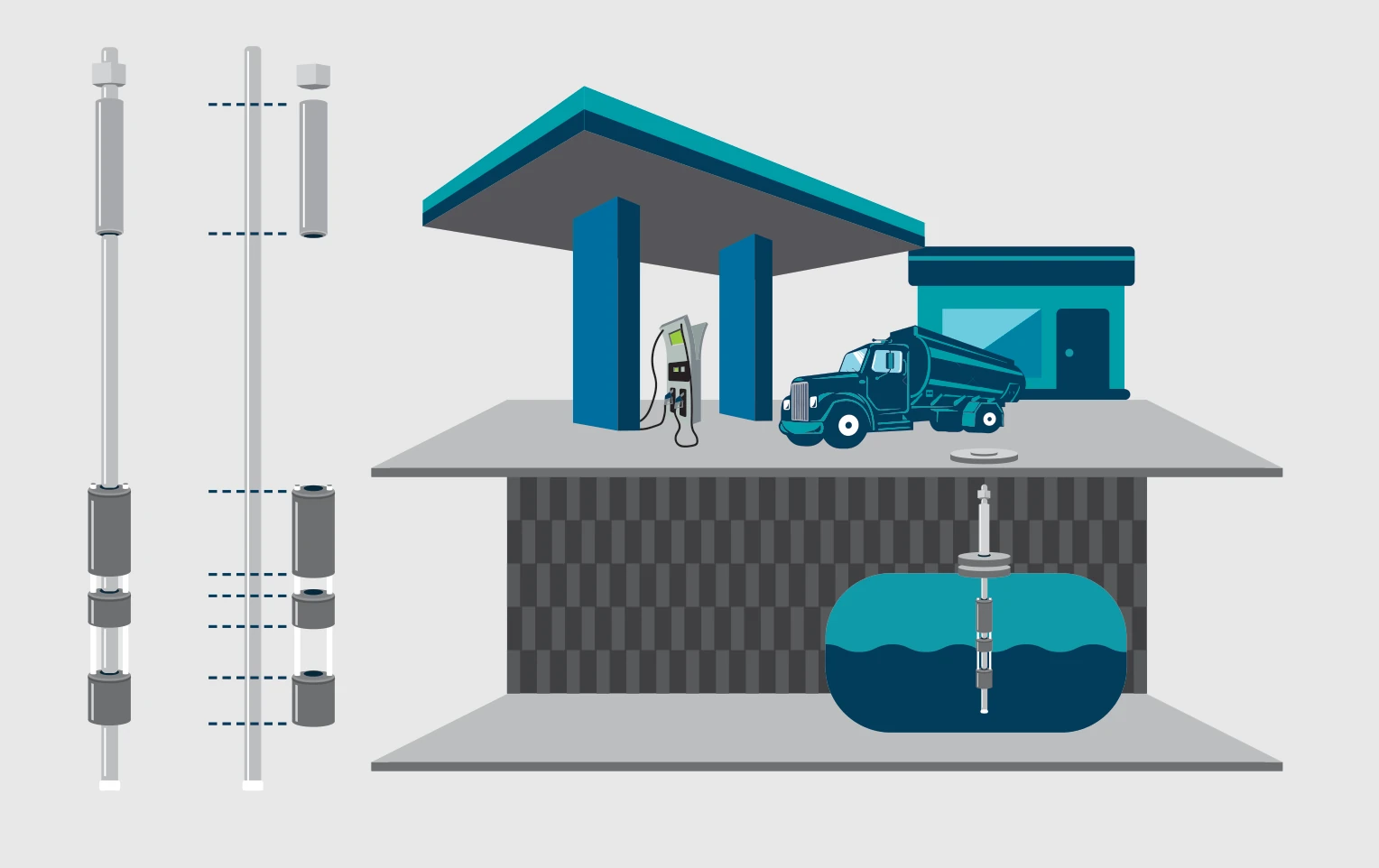
ATG (Automatic Tank Gauging) is a system that uses a probe installed in underground or aboveground tanks to continuously measure the product level, its temperature and the level of water at the bottom. Measurement is not done by hand with a dipstick but continuously and automatically; the data flows to the automation panel.
For the probe fitted to your tanks, measurement accuracy and leak detection: TX tank automation
Why is temperature measured too?
The volume of fuel changes with temperature. A volume comparison made without measuring temperature is misleading: the difference between a cold morning and a hot afternoon can look like a "loss" or a "surplus" that is not real. That is why, in a serious reconciliation, volume is corrected for temperature before it is compared.
Why is the water level critical?
Water that collects at the bottom of the tank stays below the product because of the difference in density. Once it exceeds a certain level, product quality deteriorates and there is a risk of water reaching the pump — a problem that can go as far as damage to a customer's vehicle. Because the ATG measures the water level separately, it raises an alert when the threshold is exceeded.
How is a leak detected?
Leak detection does not come from a single measurement but from consistency over time. The system expects the level to stay constant when there are no sales; if the level keeps falling with no delivery and no sales activity, that is a warning sign. The really strong check, however, is reconciliation together with pump data: if the difference between the quantity sold and the quantity that left the tank falls outside the acceptance limit, a leak, a measurement error, calibration drift or a loss is investigated.
Delivery control
Every delivery from a tanker is also recorded separately by the ATG: the level before the delivery, the level after it and the difference between them. This is where the quantity written on the delivery note is compared with the quantity that actually went into the tank. A short delivery only comes to light when this comparison is made.
How it relates to EPDK reporting
In Turkey, the daily reports required under EPDK 1240 by EPDK (Turkey's Energy Market Regulatory Authority) include tank delivery and stock movement data. When this data is produced directly by the tank automation instead of being compiled by hand, the margin of error drops and the daily submission workload disappears. On ELPO's side, this flow is automated with STX.
Next step
For details, see the tank automation page; for its counterpart on the sales side, see the pump automation article.