






Fuel Station Automation Companies: 9 Providers (2026)
Companies active in fuel station automation in Turkey and worldwide, the criteria to check when choosing a system, and where AX stands in this picture.
What exactly is this field?
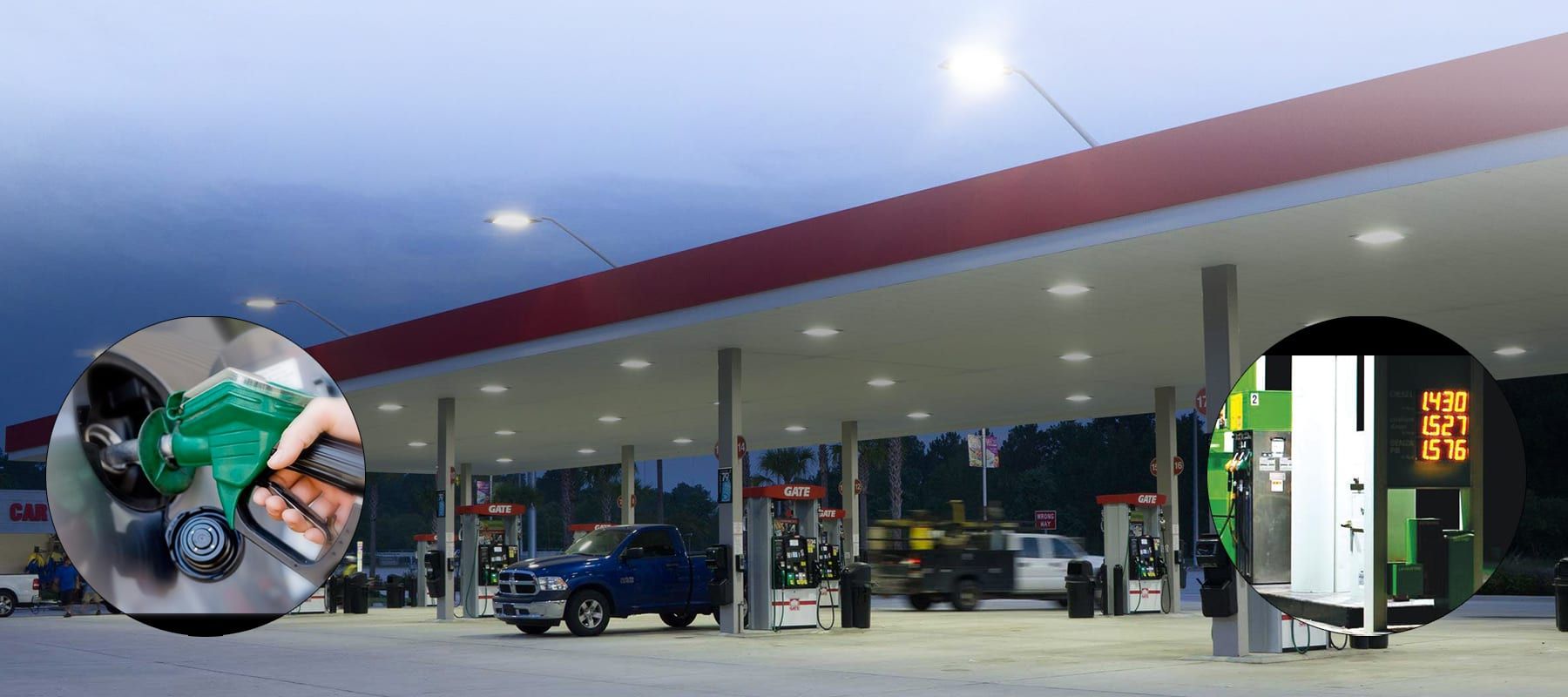
Fuel station automation (known internationally as forecourt automation) is the hardware + software work that brings a station's pumps, tanks, vehicle recognition units and payment terminals together in a single control layer. The scope usually consists of the following parts:
- Pump automation — authorising dispensers and reading sales in real time
- Tank automation (ATG) — level, temperature, water detection, loss and leakage calculation
- Vehicle recognition — automatic authorisation tied to the vehicle, and fleet limits
- Central management — monitoring a multi-station network from a single panel
- Fiscal integration — EPDK reporting and e-Belge (Turkish electronic document) processes
What sets this field apart in Turkey is the station automation obligation introduced by Board Decision No. 1240 of EPDK (Turkey's Energy Market Regulatory Authority). A system sold abroad cannot be used directly without a layer of compliance with Turkish legislation.
Companies active in Turkey
The list below is alphabetical, implies no ranking or claim of superiority and is not exhaustive. Each company's current product scope, references and pricing should be verified from its own sources — here we only state who is present in the field.
- Asis — active in fuel station automation and payment systems.
- ELPO Bilişim — AX fuel station automation and its subsystems (PX pump, TX tank, TTX vehicle recognition, CX central management). Described separately below.
- Mepsan — active in fuel dispenser manufacturing and station automation.
- Turpak — active in fuel station automation and vehicle recognition systems.
Names that stand out in the international market
Likewise an alphabetical, non-exhaustive list:
- Doms (Denmark) — forecourt control electronics
- Dover Fuelling Solutions / Wayne (USA) — dispensers and forecourt systems
- Gilbarco Veeder-Root (USA) — dispensers, tank gauging and forecourt software
- Scheidt & Bachmann (Germany) — station and payment systems
- Tokheim (Europe) — dispensers and forecourt equipment
These companies are usually used in Turkey through a local integrator or distributor; EPDK compliance and the e-Belge side are a separate layer that has to be solved.
What to look for when choosing
When comparing offers, questions with measurable answers are more useful than marketing headlines:
- Is EPDK 1240 compliance documented? Ask for written conformity, not a verbal statement.
- Which dispenser brands and protocols are supported? Ask about the models at your site one by one; "all of them" is not a sufficient answer.
- Does tank gauging include temperature correction? Without this correction, the loss and leakage calculation is misleading.
- Is the e-Belge side inside the system or a separate contract? If separate, it means a second supplier and a second invoice.
- How does central monitoring work in a multi-station setup? A single-station demo does not answer this question.
- What is the committed on-site response time in case of a fault? Ask for a written SLA.
- Does the data stay with you? Where sales data is held and whether it can be exported should be written into the contract.
Where does AX stand in this picture?
Verifiable facts:
- Domestic development and production. Hardware and software are developed within ELPO; when legislation changes, there is no need to wait for a foreign manufacturer's roadmap.
- e-Belge under the same roof. ELPO Bilişim is on the official list of e-Fatura (e-Invoice) private integrators of Turkey's Revenue Administration (GİB); the authorisation was obtained in 2015. You can verify our name on the list. This means an invoice created at the station goes to GİB without a second integrator contract.
- Subsystems can be purchased separately. PX pump, TX tank, TTX vehicle recognition, CX central management — you do not have to buy them all at once.
- Track record in the field. The company was founded in 2011; the team's history in fuel automation goes back to 1997.
Which of these makes a difference for your station depends on your site structure. We recommend asking the seven questions above in the same way to us and to other providers — what makes a comparison meaningful is asking everyone the same question.
For details, see the AX fuel station automation page, and explore the subsystems on the pump and tank automation pages.